When to go, what you see and how busy it gets
Nikko day trip: season, crowds, shrines
When to visit Nikko, how autumn traffic changes the day, what Tōshōgū, Rinnō-ji and Futarasan are, and what to see at Kegon Falls and Lake Chūzenji.
See Nikko day tours on GetYourGuide ↗Quick answer
Nikko works all year. Autumn colour is best around Lake Chūzenji and the Irohazaka road in mid-to-late October and reaches the town of Nikko in the first half of November, but the road can crawl at that time. Summer is cooler up at the lake, and in winter Kegon Falls freezes almost solid. UNESCO protects 103 buildings of two shrines and one temple here, and a day tour sees only part of them.
What UNESCO protects at Nikko
UNESCO inscribed the Shrines and Temples of Nikkō in 1999. The site covers 103 buildings or structures and the forested setting around them. They belong to three institutions: two Shinto shrines, Tōshōgū and Futarasan Shrine, and one Buddhist temple, Rinnō-ji. The cedar forest around the buildings was planted in the early 17th century, during the construction of Tōshōgū. The three were once run as a single complex. After a government order in 1871 required religious institutions to affiliate with either Shinto or Buddhism, they were divided into the two shrines and one temple that exist today.
Tōshōgū: what you actually see
Tōshōgū is the shrine of Tokugawa Ieyasu, who was enshrined here after his death in 1616. His grandson Iemitsu, the third shogun, built the elaborate complex about twenty years later. Inside the paid area you first pass storehouses with carvings, including the three wise monkeys on the sacred stable and elephants carved by an artist who had never seen one. Next comes the Yōmeimon gate, whose other name suggests you could look at it until sundown. Honjidō hall has the Crying Dragon on its ceiling, and the Sleeping Cat carving sits on the Sakashitamon gate.
Stairs, photos and the tomb
Visitors can enter the richly decorated main shrine halls, but photographs are not allowed inside. Past the Sleeping Cat gate, a long flight of stone steps climbs through the forest to Ieyasu's mausoleum, and the ascent takes about five minutes. The steps matter if mobility is a worry. The Nikko Toshogu Museum stands just outside the shrine, and the official ticket list sells it separately from the shrine entry. It holds Ieyasu's personal effects, such as armour, swords and letters he wrote.
Rinnō-ji and Futarasan, the other two
Rinnō-ji's own history page says the monk Shōdō founded it in 766. Its main hall, the Sanbutsudō, holds three large gilded statues regarded as Buddhist forms of Nikko's three sacred mountains, and a ten-year renovation of the hall finished in 2019. Taiyūin, the mausoleum of Iemitsu, faces Tōshōgū and is more modest. Futarasan Shrine is dedicated to the deities of Mount Nantai, Mount Nyoho and Mount Taro, and most of its grounds are free to enter. Shinkyo Bridge belongs to Futarasan Shrine.
Read next: Nikko day tour from Tokyo: which to book
Kegon Falls and Lake Chūzenji
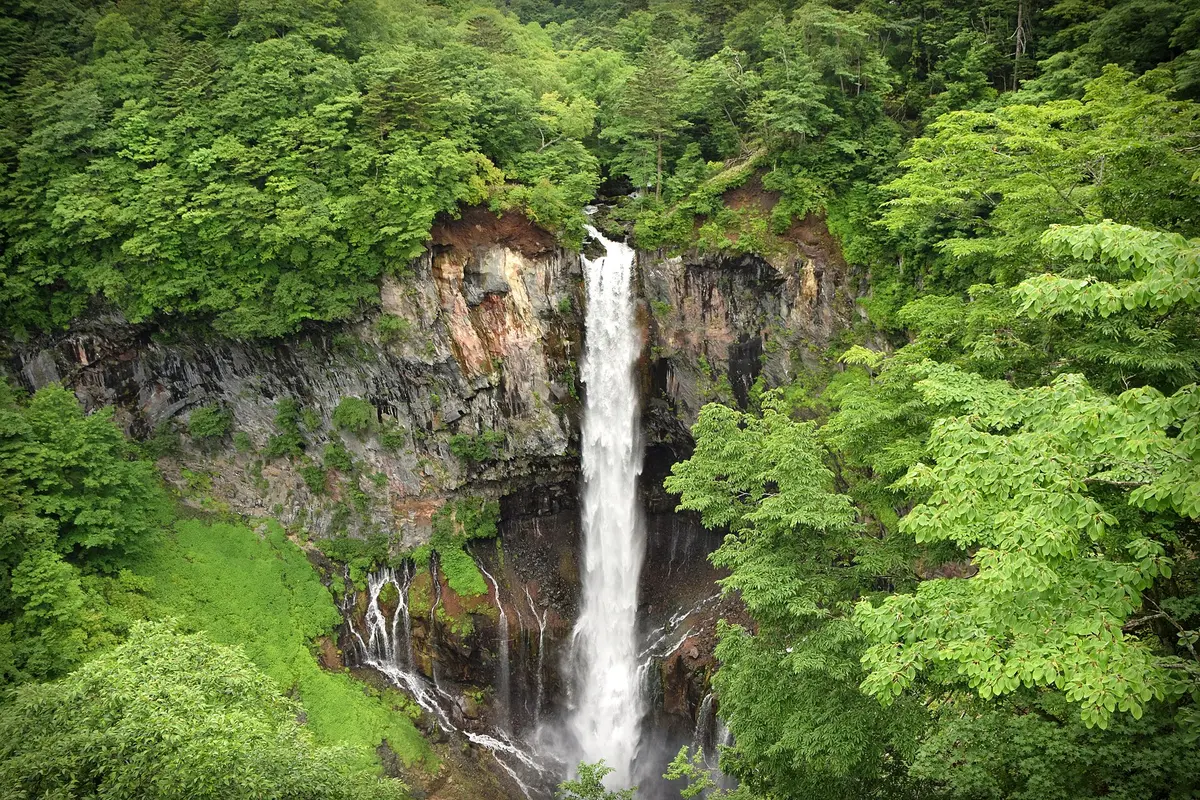
Lake Chūzenji formed about 20,000 years ago, when an eruption of Mount Nantai blocked the valley. Kegon Falls is the lake's only outlet and drops 97 metres. A free viewing platform above the falls is easy to reach on foot, and a paid platform at the base is reached by a lift that goes down about 100 metres. Nikko's official visitor guide calls the lake Japan's highest natural lake, at 1,269 metres above sea level. Foreign embassies once built holiday villas on its shores.
The Irohazaka road
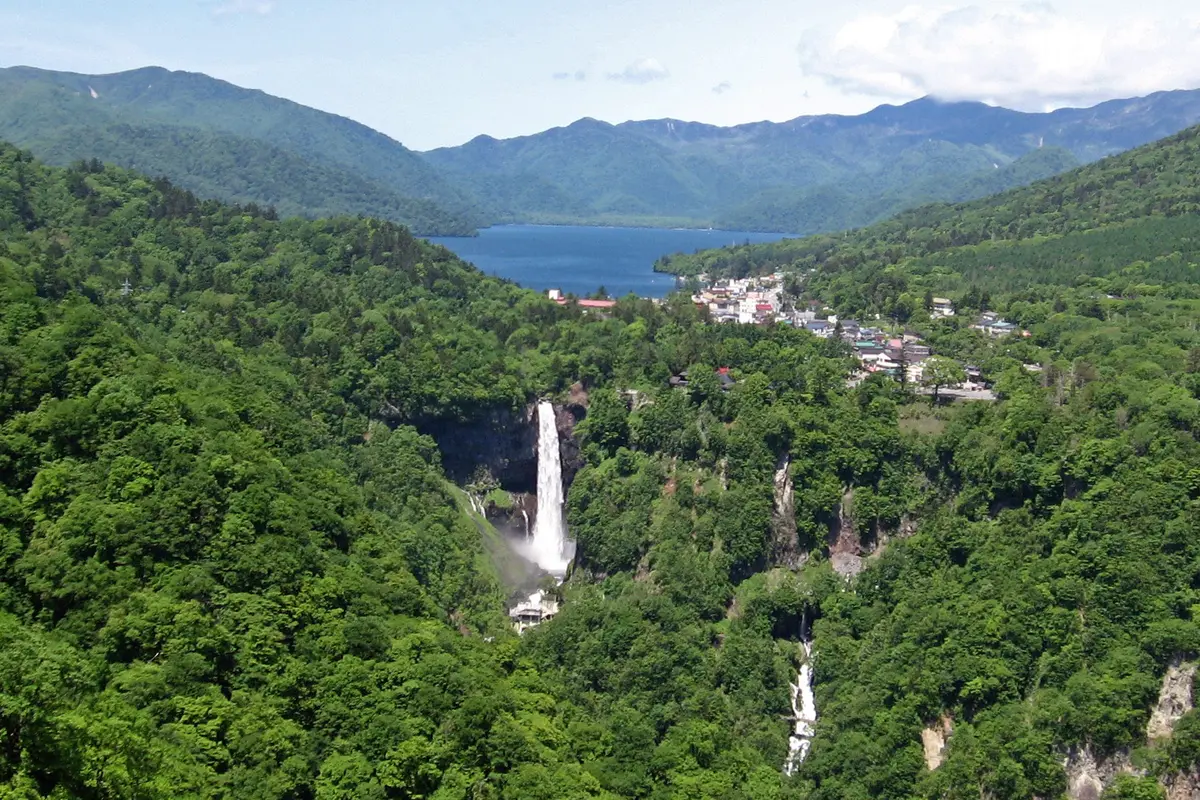
The Irohazaka road links Nikko town to Lake Chūzenji with 48 hairpin turns. It is two separate one-way roads, one for going up and one for coming down, and the turns are named after the 48 characters of the old Japanese syllabary. The usual drive takes about 20 minutes. At the autumn peak, a guide supervised by the Nikko City Tourism Association says it can take two to three hours, and it recommends going early in the morning. Hairpin turns are hard on anyone prone to motion sickness, so take a seat near the front.
Autumn colour: where and when
In an average year the colour starts high up at Yumoto Onsen in early October, is best around Lake Chūzenji and the Irohazaka road in mid-to-late October, and reaches the town of Nikko in the first half of November. The maples in Rinnō-ji's Shōyōen garden usually peak around the first half of November too. Because of this gap, a late-October day can find the lake at its best while the town is still green, so check a current colour report before you pick a date.
Spring, summer and winter
Nikko's visitor sources single out autumn for traffic jams, so the other seasons are about scenery rather than queues. Spring brings green slopes, with cherry blossom at the lake and azaleas in early summer. In summer the lake's height keeps it cooler than the lowlands, and migratory Asian house martins visit Kegon Falls. In winter the falls freeze almost solid, which gives the waterfall a different look from the green summer view. Dress in layers for the lake in any season, because it sits at 1,269 metres, higher than Nikko town.
Crowds: where the day slows
The crowding to plan for is traffic more than the shrines. In autumn the road from Nikko to Chūzenji can slow to a crawl as visitors come for the foliage, and the Irohazaka road is the bottleneck. On the coach tour, the operator can reorder stops or change timings for traffic or weather, and those on-the-day changes are not refundable. If you travel on your own, an early start is the advice in the Nikko City Tourism Association-supervised guide, and leaving slack in the plan helps.
What to bring
Wear comfortable shoes, because the shrines have stone paths and steps. Carry water and some cash, since cards may not be accepted everywhere. The coach tour doesn't allow luggage or large bags, with one hand-carry bag per person. Bring a layer for the lake. Nikko is known for yuba, a delicate tofu skin, and there are also soba noodle restaurants and casual cafés in the area, so you can buy lunch rather than pack it. Remember that photographs are not allowed inside the main shrine halls, and keep your bag small enough for the stairs and the coach.
Who this isn't for
If you want to see all three UNESCO institutions properly, one day is short, because a coach tour's stops include only Tōshōgū among them. If steps are difficult, the climb to Ieyasu's tomb may be too much, and the booking page lists no accessibility details, so ask the operator before you book. If bends make you ill, the Irohazaka road is the hardest part of the day. And if you want a quiet Nikko, remember that the weeks when the colour peaks are the busiest on the road.
Frequently asked questions
When is the best time to visit Nikko?
Autumn is the best known. Colour is best around Lake Chūzenji in mid-to-late October and reaches Nikko town in the first half of November, but traffic is heaviest then. Summer is cooler at the lake, and Kegon Falls freezes almost solid in winter.
Is Tōshōgū a UNESCO World Heritage Site?
Yes. It is part of the Shrines and Temples of Nikkō, inscribed in 1999. The site covers 103 buildings or structures of Tōshōgū, Futarasan Shrine and Rinnō-ji temple, plus the forest setting.
How long does the Irohazaka road take?
Usually about 20 minutes. At the autumn peak a guide supervised by the Nikko City Tourism Association says it can take two to three hours, so go early or leave extra time.
Can you go inside the main hall at Tōshōgū?
Visitors can enter the richly decorated main shrine halls, but photographs aren't allowed inside. Ieyasu's mausoleum is up a long flight of stone steps beyond the Sleeping Cat gate, a climb of about five minutes.
Is Kegon Falls worth seeing in winter?
Yes, if you like cold: the falls freeze almost solid. Dress warmly, as the lake sits at 1,269 metres. The tour operator may cancel for severe weather and aims to tell guests the day before.
How high is Kegon Falls, and can I get to the base?
Kegon Falls drops 97 metres. A free platform above is easy to reach on foot, and a paid platform at the base is reached by a lift that goes down about 100 metres.
Sources
- Nikko Toshogu Shrine (Nikko Official Guide)
- History (Nikko-zan Rinnoji official site)
- Kegon Falls (Nikko Official Guide)
- Lake Chuzenji (Nikko Official Guide)
- Irohazaka Winding Road (supervised by the Nikko City Tourism Association)
- Nikko (Japan Guide)
- Toshogu Shrine (Japan Guide)
- Shrines and Temples of Nikkō (Wikipedia)