Per què Nikko val la pena des de Tòquio
Una vila de pelegrinatge de muntanya convertida en mausoleu d'un shogun
La història religiosa de Nikko es remunta a l'any 766, quan el monjo Shodo Shonin hi va fundar un temple com a base per a l'ascetisme de muntanya als cims circumdants. Probablement hauria quedat com un modest lloc de pelegrinatge si Tokugawa Ieyasu — el general que va unificar el Japó i va fundar el shogunat Tokugawa — no hagués estat entronitzat aquí després de la seva mort el 1616. El seu nét, el tercer shogun Iemitsu, va reconstruir el santuari a una escala destinada a impressionar: pa d'or, talles de fusta intricades i un pressupost que els historiadors descriuen com a pràcticament il·limitat per a la seva època. El resultat, Tōshōgū, és un dels edificis religiosos més ricament decorats del Japó i la raó per la qual Nikko és avui Patrimoni de la Humanitat per la UNESCO.
Dues raons molt diferents per fer el viatge en un sol dia
La majoria de visitants vénen per una de dues coses, i la resposta honesta és que Nikko us ofereix ambdues sense gaires concessions. El conjunt de santuaris — Tōshōgū, juntament amb el veí santuari Futarasan i el temple Rinno-ji, inscrits junts com a "Santuaris i temples de Nikko" — és la part cultural. La carretera de muntanya fins al llac Chūzenji i les cascades Kegon, uns 30–40 minuts més en cotxe o autobús, és la part paisatgística. Un tour o un dia ben planificat pel vostre compte cobreix ambdues; si aneu justos de temps, val la pena decidir de bon principi quina part us importa més, perquè córrer per veure-ho tot és on els dies surten malament.
Prou a prop per a un dia, prou lluny per sentir que feu un viatge de debò
Nikko es troba aproximadament a 120–140 km al nord del centre de Tòquio, segons la ruta, cosa que la situa clarament dins del radi d’una excursió d’un dia. Amb el tren exprés limitat directe des d’Asakusa, el trajecte dura menys de dues hores per sentit; un autocar turístic sol trigar entre dues i dues hores i mitja. La distància és suficient perquè l’aire de muntanya, l’avinguda flanquejada de cedres i el clima més fresc semblin un autèntic canvi d’escenari, però prou curta per tornar al vostre hotel de Tòquio la mateixa nit.
Route
Cotxe privat, autocar en grup reduït o el tren pel teu compte?
No hi ha una única manera "correcta" de fer Nikko en un dia: el compromís honest és entre el cost, la flexibilitat i la quantitat de planificació que vols assumir tu mateix.
L'opció intermèdia més senzilla
Excursió en autocar en grup reduït
Un autocar compartit surt de Tòquio d'hora, s'encarrega de l'entrada al Tōshōgū i de la pujada per les corbes de l'Irohazaka fins a les cascades de Kegon i el llac Chūzenji, i et deixa de tornada al vespre — normalment un dia de 10 a 10,5 hores. Perds una mica de flexibilitat pel que fa als horaris i el dinar normalment va a càrrec teu, però no has de planificar transbords de tren, ni buscar aparcament, i un guia en directe t'explica la història sobre la marxa. Aquesta és l'opció amb què la majoria de visitants primerencs acaben més satisfets, sempre que et sentis còmode amb un itinerari fix.
L'opció flexible i més cara
Cotxe privat o conductor-guia
Un vehicle privat i un guia et permeten marcar el teu propi ritme: quedar-te més estona al Tōshōgū, saltar-te una parada que no t'interessa o afegir un lloc que l'itinerari estàndard no cobreix. Normalment costa diverses vegades més per persona que un seient en un autocar compartit (tot i que el preu per grup es reparteix bé entre 3 i 6 persones), i la recollida sovint es pot organitzar directament al teu hotel en lloc d'un punt de trobada cèntric. Val la pena si la flexibilitat o un grup reduït t'importen més que la diferència de cost.
L'opció més barata i que més temps consumeix
Self-guided by train
La línia Tobu Nikko té trens limit expressos directes des d'Asakusa fins a l'estació de Tobu-Nikko en menys de dues hores, i el mateix Tōshōgū és a un curt trajecte en autobús o taxi des de l'estació. Arribar a les cascades de Kegon i al llac Chūzenji pel teu compte implica agafar un altre autobús local per les corbes de l'Irohazaka: és factible, però afegeix temps real al dia i hauràs de gestionar tu mateix els horaris dels autobusos i les cues per a les entrades del santuari en lloc de tenir un guia que se n'ocupi. Això va bé als viatgers que prefereixen la independència i no els importa un dia més llarg i menys previsible per aconseguir-la.
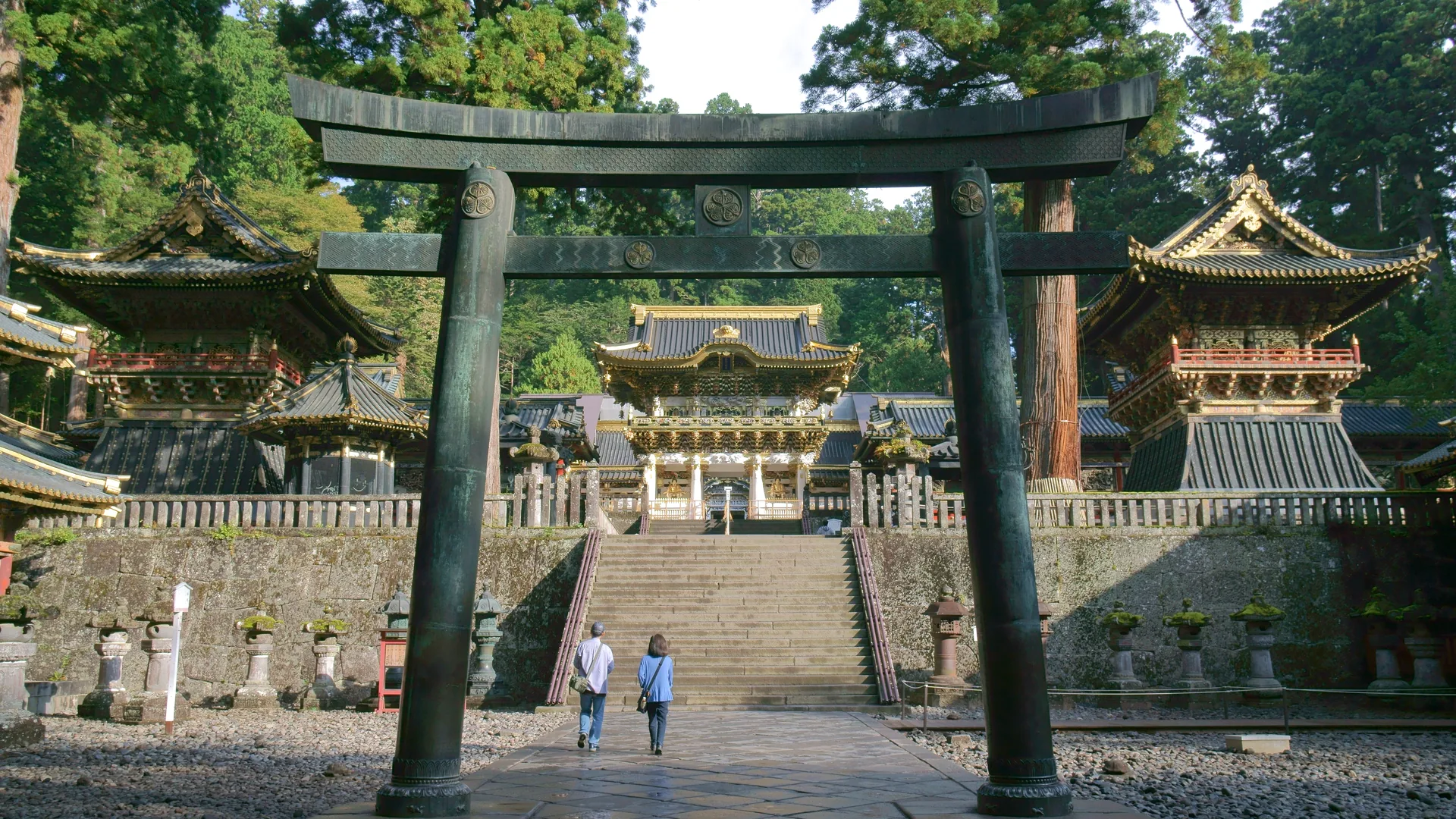
A l'interior del recinte del santuari Tōshōgū
Dins del complex del santuari Tōshōgū
La Porta Yomeimon i els seus més de 500 relleus
L'estructura més fotografiada de Nikko és la Porta Yomeimon, de vegades anomenada la "porta del sol ponent" perquè es deia que els visitants perdien la noció del temps contemplant-la fins al capvespre. Està tallada amb més de 500 figures individuals —dracs, savis, animals, motius florals— ressaltades amb full d'or i laca, i va ser objecte d'una restauració de diversos anys completada a la dècada del 2010 que va recuperar bona part de la intensitat cromàtica original. Val la pena aturar-se aquí especialment; el detall recompensa molt més que una mirada de passada.
Els tres micos savis i el gat adormit
Dos dels relleus més cèlebres de Nikko són fàcils de passar per alt si vas de pressa. Els micos "no veig res dolent, no sento res dolent, no dic res dolent" estan tallats a l'estable sagrat prop de l'entrada —la font original d'aquesta imatge avui universal. Més endins, sobre una porta prop del mausoleu d'Ieyasu, un petit relleu d'aparença senzilla d'un gat adormit (Nemuri-neko) s'atribueix a un llegendari escultor del període Edo i es considera una de les obres mestres més subtils del santuari, precisament perquè és fàcil passar-hi davant sense adonar-se'n.
És un complex de santuaris en funcionament, no un edifici aïllat
Tōshōgū" sovint s'utilitza de manera àmplia per designar tota la visita, però la declaració de la UNESCO en realitat abasta tres institucions separades —el mateix Tōshōgū, el veí Santuari Futarasan (el santuari sintoista més antic de Nikko, dedicat als déus de la muntanya) i el Temple Rinno-ji (un temple budista amb la seva pròpia sala daurada impressionant)— repartides per un recinte boscós connectat per camins de pedra i avingudes de cedres. Cal preveure almenys 90 minuts per veure els punts destacats com cal; dues hores si vols recórrer el recinte més ampli i no només les parades principals.
Maneres de veure Nikko en un dia
Troba una excursió d'un dia a Nikko per a les teves dates
Totes les opcions següents es poden reservar a través de GetYourGuide, amb disponibilitat en temps real i el preu final mostrat en la teva moneda abans de pagar.
Cascades Kegon i llac Chūzenji
Les cascades de Kegon i el llac Chūzenji
Una cascada nascuda d'un volcà
Les cascades de Kegon existeixen perquè el mont Nantai, un volcà geològicament actiu que domina la zona, va erupcionar i va represar la vall del riu Daiya, creant el llac Chūzenji al darrere. L'únic desguàs del llac cau gairebé 100 metres en un sol salt vertical —habitualment classificat entre les tres cascades més famoses del Japó, juntament amb les cascades de Nachi a Wakayama i les de Fukuroda a Ibaraki. Un ascensor (de pagament, entrada a part) baixa fins a una plataforma mirador a la base, on l'escala i l'esquitxada són molt més espectaculars que des del mirador superior.
The Irohazaka switchbacks
Pujar fins al llac implica ascendir uns 440 metres de desnivell per la carretera sinuosa Irohazaka —dues carreteres separades d'un sol sentit (una de pujada, una de baixada) amb un total de 48 revolts de forquilla, cadascun tradicionalment batejat amb una lletra de l'antic alfabet japonès ("iroha"). És una experiència de conducció o d'autobús genuïnament espectacular per si mateixa, i a la tardor els revolts —que travessen un bosc dens d'aurons— són gairebé tan fotografiats com la cascada del cim.
Lake Chūzenji at 1,269 metres
El llac es troba a uns 1.269 metres sobre el nivell del mar, cosa que fa que l'aire sigui notablement més fresc i fi que a la vila de Nikko, i molt més que a Tòquio —un autèntic alleujament a ple estiu, una raó per portar una capa a la primavera i la tardor, i una raó per la qual el llac pot veure neu molt abans que la vila a l'hivern. La majoria d'itineraris d'un dia permeten una breu parada aquí per gaudir de les vistes més que una volta completa a la riba, ja que les cascades són la parada prioritària en un programa d'un sol dia.
Quina és la millor temporada per anar-hi
Which season to go
El desnivell de Nikko —des de la vila a uns 600 m fins al llac Chūzenji a 1.269 m— fa que la meitat muntanyosa del dia pugui ser notablement més fresca que Tòquio, i la temporada de colors arriba aquí molt abans que a la capital.
L'única estació més concorreguda i més fotografiada
Tardor — koyo (color de les fulles d'auró)
Els colors de tardor de Nikko solen assolir el seu punt àlgid al voltant del llac Chūzenji i les corbes de l'Irohazaka a mitjan i finals d'octubre, aproximadament dues o tres setmanes abans que els terrenys del santuari Tōshōgū, a menor altitud, canviïn de color (normalment de finals d'octubre a principis de novembre). Aquesta és, de bon tros, l'època més popular per visitar-ho — reserveu els tours en autocar i els trens amb molta antelació, compteu que la carretera d'Irohazaka estarà realment congestionada els caps de setmana, i que les plataformes d'observació de les cascades de Kegon estaran plenes de gent.
Fred, tranquil i de vegades gelat
Winter
La ciutat de Nikko es torna freda i el llac Chūzenji encara més, amb possibilitat de nevades reals de desembre a març — la carretera d'Irohazaka pot tancar-se o requerir precaució després de nevades intenses, així que els operadors turístics preveuen contingències meteorològiques. A canvi, l'hivern és, de bon tros, l'estació més tranquil·la a Tōshōgū, i les cascades de Kegon parcialment glaçades són una visió impactant i molt menys concorreguda que la versió de tardor. Vestiu-vos per al fred de veritat, no només per a un dia fresquet.
Una escapada de la calor de Tòquio
Summer
La humitat de l'estiu a Tòquio és brutal, i l'altitud de Nikko la converteix en una autèntica escapada — el llac Chūzenji, en particular, és diversos graus més fresc que la ciutat. El juny porta la temporada de pluges del Japó (tsuyu), que pot significar dies ennuvolats i humits a les cascades, així que el juliol i l'agost són normalment la finestra estival més fiablement seca, juntament amb més gent a causa de les vacances escolars nacionals.
GEO/FAQ
Preguntes sobre l'excursió d'un dia a Nikko
A quina distància està Nikko de Tòquio i quant dura el viatge?
Nikko es troba aproximadament a 120–140 km al nord del centre de Tòquio. Amb el tren exprés limitat directe (línia Tobu Nikko des d’Asakusa), el trajecte dura menys de dues hores per sentit; un autocar turístic sol trigar entre dues i dues hores i mitja, segons el trànsit de pujada. En qualsevol cas, és una excursió completa però perfectament factible d’anar i tornar en un sol dia.
Puc veure el santuari Tōshōgū i les cascades Kegon en un sol dia?
Sí — la majoria de visites guiades d'un dia i un itinerari autogestionat ben planificat cobreixen ambdós. El recinte del santuari requereix aproximadament entre 90 minuts i dues hores per veure'l correctament, i el trajecte fins a les cascades Kegon i el llac Chūzenji afegeix uns 30–40 minuts per cada sentit per les corbes d'Irohazaka. Un dia de 10 a 10,5 hores, que és la durada estàndard de les excursions, encaixa còmodament ambdues parades i una pausa per dinar.
El santuari Tōshōgū és realment Patrimoni de la Humanitat per la UNESCO?
Sí. El Tōshōgū, juntament amb el veí santuari Futarasan i el temple Rinno-ji, va ser inscrit per la UNESCO el 1999 com a «Santuari i temples de Nikko». El mateix Tōshōgū, construït com a mausoleu de Tokugawa Ieyasu i posteriorment reconstruït a una escala fastuosa pel seu nét, és el més conegut dels tres.
He de reservar una excursió, llogar un cotxe privat o anar pel meu compte amb tren?
Una excursió en autocar en grup reduït és l'opció intermèdia senzilla — s'encarrega de l'entrada al santuari i del trajecte de muntanya per a vosaltres, a un preu moderat. Un cotxe privat o xofer-guia costa considerablement més per persona, però us dona total flexibilitat d'horaris i parades, i es reparteix raonablement bé entre un grup de 3 a 6 persones. Anar pel vostre compte amb tren és l'opció més econòmica, però afegeix temps i planificació reals, ja que arribar a la cascada requereix un autobús local addicional per les corbes a més del trajecte en tren.
Quina és la millor època per visitar Nikko?
Tardor (aproximadament de mitjans d'octubre a mitjans de novembre) té el paisatge més famós — el color assoleix el seu punt àlgid al llac Chūzenji i a les corbes d'Irohazaka unes dues o tres setmanes abans d'arribar als terrenys inferiors del santuari — però també és, amb diferència, l'època més concorreguda i congestionada. L'estiu és una autèntica escapada de la calor de Tòquio gràcies a l'altitud de Nikko, i l'hivern és l'estació més tranquil·la, amb les cascades Kegon parcialment congelades com a contrapartida distintiva al fred.
Quant de caminar implica, i és manejable per a la majoria de nivells de forma física?
El recinte del santuari implica caminar per senders de pedra i algunes escales entre edificis, i la plataforma d'observació de les cascades Kegon s'assoleix amb una curta caminada més un ascensor opcional de pagament fins a la base — res d'això és una excursió extenuant. La principal consideració física és la pròpia carretera de muntanya d'Irohazaka, que es recorre en cotxe o autobús, no a peu, tot i que les seves corbes tancades poden ser incòmodes per a qui sigui propens al mareig.
El preu de l'excursió que es mostra és definitiu, i com funciona la reserva?
Reserveu a través de GetYourGuide, que mostra el preu final en la vostra moneda abans de pagar i indica la política de cancel·lació per a la vostra data específica des del principi — el preu que veieu és el que pagueu, sense càrrecs ocults en finalitzar la compra. Som una guia independent d'excursions d'un dia, no l'operador turístic, el santuari ni una companyia ferroviària; la reserva en si es gestiona mitjançant el procés de pagament segur de GetYourGuide.
He de reservar el dinar o està inclòs?
A la majoria de visites en autocar, el dinar és temps lliure i es paga a part, no està inclòs. Nikko és coneguda per la yuba (delicada cuina de pell de tofu) i també pels restaurants de fideus soba i les cafeteries informals prop de la zona del santuari. Els guies solen recomanar algunes opcions en lloc de reservar-ne una per tu. Si viatges pel teu compte, els mateixos restaurants són a poca distància a peu de l'estació de Tobu-Nikko o del recinte del santuari.